x
-- Loading

Weather data by MET Norway

Explore Balochistan

Explore Balochistan: Nature, History and Adventure

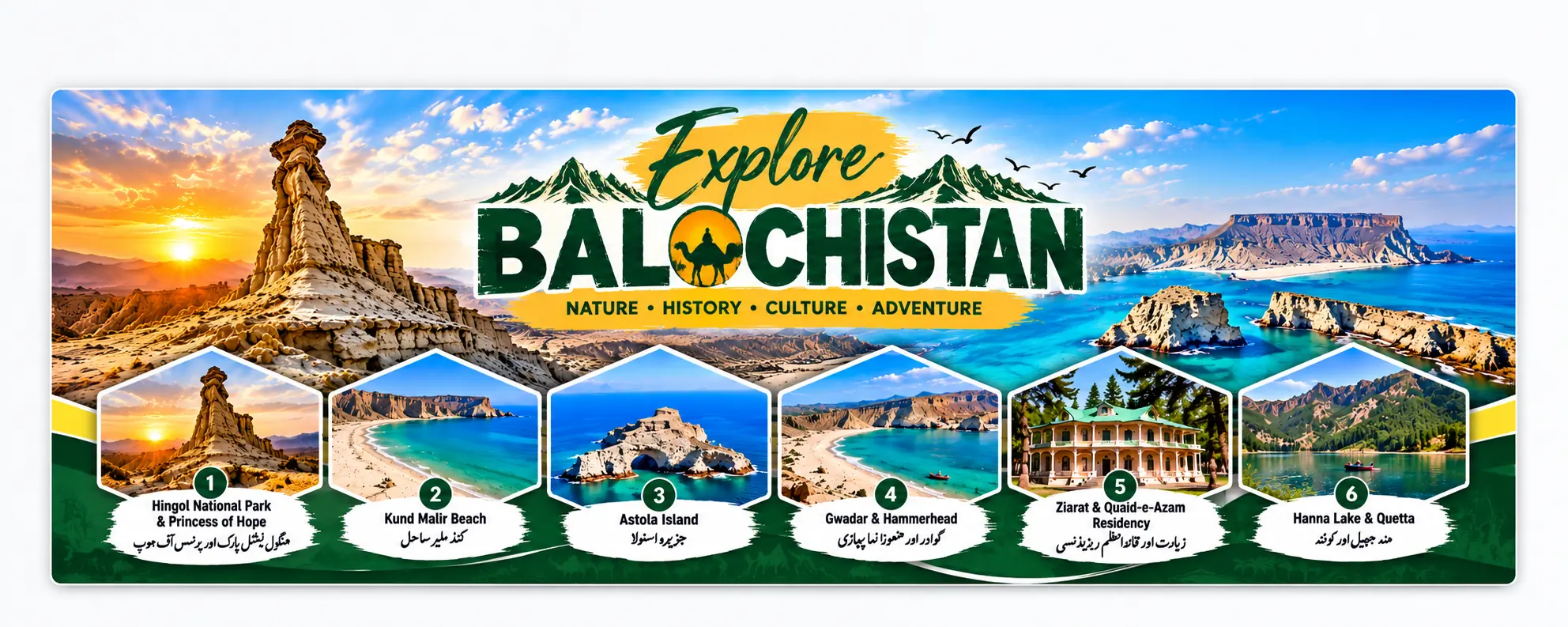
Balochistan is Pakistan's largest province by area and one of its most remarkable destinations for nature, history and adventure. Its landscapes include rugged mountains, ancient archaeological settlements, beautiful beaches, deserts, waterfalls and historic monuments. The province also has a fascinating cultural heritage shaped by centuries of trade, migration and traditional communities.

Explore the natural beauty of Hingol National Park, the coastal scenery of Gwadar, the ancient history of Mehrgarh, the historic Residency at Ziarat and the sacred heritage of Hinglaj Mata Temple. This guide introduces 12 outstanding destinations and explains their history, importance and visitor attractions.

Hingol National Park

1. Hingol National Park & Princess of Hope

About

Hingol National Park is one of Pakistan's largest protected natural areas, located along the Makran Coastal Highway in Balochistan. Its landscape includes rugged mountains, deep valleys, desert plains, mud volcanoes and the Hingol River, which flows towards the Arabian Sea. The park is home to a variety of wildlife and unusual geological formations. Among its most famous landmarks is the Princess of Hope, a naturally sculpted rock formation that resembles a woman standing upright and looking towards the horizon.

History & Importance

The Princess of Hope is not a statue made by an ancient civilization. It is a natural rock formation shaped over a very long period by wind, rain and erosion. As softer rock gradually wore away, the remaining formation developed a shape resembling a standing female figure. The name became famous after Hollywood actress and United Nations Goodwill Ambassador Angelina Jolie visited the area in 2002 and reportedly named it "Princess of Hope". The word Hope reflects the impression of a graceful figure looking towards the distant horizon. It is a symbolic name inspired by its appearance, not the name of a real historical princess. Hingol is also important for its unique geology, biodiversity and cultural landscape.

What to See & Do

Visitors can admire the Princess of Hope, photograph the unusual mountain formations and explore the dramatic scenery along the Makran Coastal Highway. Other attractions in the wider park include the Balochistan Sphinx area, mud volcanoes, rocky valleys and the Hingol River landscape. The park provides opportunities for sightseeing, photography and nature observation. Visitors can combine the trip with Kund Malir Beach and other coastal destinations. Carry drinking water, sun protection and essential supplies, and avoid damaging the fragile rock formations.

Pakistan Tourism Portal
Kund Malir Beach

2. Kund Malir Beach

About

Kund Malir is one of the most beautiful beaches on the Makran coastline of Balochistan. Located beside the Arabian Sea within the wider Hingol National Park region, it is known for its golden sand, coastal waters and mountains rising close to the shoreline. The contrast between the desert landscape and the blue sea gives the beach a distinctive appearance. Its location along the Makran Coastal Highway has made it a popular destination for road trips from Karachi and other parts of Pakistan.

History & Importance

Kund Malir forms part of the historic Makran coastal region, which has been connected with fishing communities, maritime travel and trade routes across the Arabian Sea for centuries. The wider Makran coast has featured in historical accounts of regional travel and military expeditions. For generations, local communities have depended on the sea for fishing and livelihood. In modern times, the development of the Makran Coastal Highway has made previously remote coastal areas more accessible. Kund Malir has consequently become an important destination for domestic tourism and has helped highlight the tourism potential of Balochistan's coastline.

What to See & Do

Visitors can enjoy the sandy shoreline, photograph the mountains meeting the sea and experience the peaceful atmosphere of the Arabian Sea coast. The surrounding landscape is ideal for sightseeing, coastal photography and road-trip stops. Travellers can include Kund Malir in a wider journey covering Hingol National Park and Princess of Hope. Facilities may be limited, so bring food, drinking water and other essentials. Respect the natural environment and avoid leaving plastic or other waste on the beach.

Pakistan Tourism Portal
Astola Island

3. Astola Island

About

Astola Island, also known as Jezira Haft Talar or the Island of Seven Hills, is a spectacular offshore island in the Arabian Sea near Pasni in Gwadar district. It is known for its rocky hills, steep cliffs, natural caves and surrounding blue waters. As Pakistan's largest offshore island, Astola has a distinctive marine environment and is an important destination for nature lovers, photographers and adventure travellers. Its remote location gives it a different character from the beaches and coastal towns on the mainland.

History & Importance

Astola has been known to fishing communities and seafarers along the Makran coast for generations. Its position in the Arabian Sea made it a recognizable landmark for people travelling and fishing in the region. The island's ecological importance has received increasing attention because of its marine habitats and wildlife. In 2017, Astola was declared Pakistan's first Marine Protected Area, marking an important step towards the conservation of its marine environment. Its protected status makes responsible tourism and the preservation of wildlife particularly important.

What to See & Do

Visitors can explore the island's rocky landscape, cliffs, coastal views and surrounding marine environment through organized boat trips, commonly arranged from the Pasni area. The island offers opportunities for photography, nature observation and carefully planned adventure tourism. There are very limited facilities, so transport, food, water and safety arrangements must be organized in advance. Visitors should respect protected wildlife, avoid disturbing natural habitats and take all waste back to the mainland.

Pakistan Marine Protected Areas
Gwadar and Hammerhead Peninsula

4. Gwadar & Hammerhead Peninsula

About

Gwadar is an important coastal city in southwestern Balochistan, situated beside the Arabian Sea. It is known for its natural harbour, fishing communities, rocky coastline and distinctive geographical setting. The Hammerhead Peninsula is one of its most recognizable natural features. Its shape resembles the head of a hammer when viewed from above, creating a striking coastal landscape. Gwadar is an attractive destination for visitors interested in the sea, local culture, port development and the natural scenery of the Makran coast.

History & Importance

Gwadar has a distinctive political and maritime history because of its strategic position on regional sea routes. For a long period, it remained under the control of the Sultanate of Muscat and Oman. Pakistan acquired Gwadar from Oman in 1958, and the city subsequently became part of Pakistan. Its natural harbour and location near important international shipping routes have given it considerable economic and strategic importance. In recent decades, the development of Gwadar Port and its role in the China-Pakistan Economic Corridor have brought the city international attention. The Hammerhead Peninsula, meanwhile, remains a notable feature of the region's natural geography.

What to See & Do

Visitors can explore the coastal scenery, enjoy views from the Hammerhead Peninsula, visit local beaches and observe the daily life of fishing communities. The city's viewpoints offer opportunities to photograph the harbour, sea and rocky landscape. Travellers can also explore local markets and enjoy regional seafood. Gwadar is an excellent starting point for discovering other coastal destinations in Balochistan. Check local travel advisories, access arrangements and road conditions before visiting remote coastal viewpoints.

Gwadar Port Authority
Ziarat and Quaid-e-Azam Residency

5. Ziarat, Quaid-e-Azam Residency & Juniper Forest

About

Ziarat is a scenic hill station in Balochistan, famous for its cool climate, mountain valleys and extensive juniper forests. Located northeast of Quetta, it offers a refreshing contrast to the province's dry plains and coastal landscapes. The town is especially known for the Quaid-e-Azam Residency, a historic building surrounded by gardens and trees. Its surrounding juniper forest is one of the region's most valuable natural treasures, with some trees believed to be thousands of years old. Ziarat attracts visitors interested in history, nature and peaceful mountain scenery.

History & Importance

The Quaid-e-Azam Residency was built during the British period and originally served as a summer retreat for colonial officials. Its national importance comes from its association with Muhammad Ali Jinnah, the founder of Pakistan. After the inauguration of the State Bank of Pakistan on 1 July 1948, Quaid-e-Azam travelled to Ziarat for rest and medical care. He spent some of his final days at this building before his death in September 1948. The Residency is now preserved as a national monument. Ziarat is also important for its ancient juniper forest, known locally as Sanober, which represents a remarkable ecological heritage.

What to See & Do

Visitors can tour the Quaid-e-Azam Residency, explore its historic rooms and learn about the final months of Pakistan's founder. The surrounding gardens provide a peaceful setting for photography. The juniper forest offers opportunities for nature walks and observing ancient trees. Other attractions include mountain viewpoints, local markets and scenic roads through the valleys. Visitors should avoid damaging trees or disturbing the protected forest environment.

Department of Archaeology – Residency
Hanna Lake and Quetta

6. Hanna Lake & Quetta

About

Hanna Lake is a well-known recreational attraction near Quetta, surrounded by dry mountains and rugged hills. Its water creates a striking contrast with the rocky landscape and makes it a popular place for sightseeing and photography. Quetta, the provincial capital of Balochistan, is situated in a mountainous valley and serves as an important centre of administration, trade and education. The city is known for its mountain surroundings, fruit markets, traditional food and distinctive climate. Together, Quetta and Hanna Lake offer a combination of urban culture and natural scenery.

History & Importance

Quetta has held strategic importance for centuries because of its position near routes connecting the South Asian plains with Afghanistan and Central Asia. During the nineteenth century, the British established a major military and administrative presence in the region, and Quetta developed as an important cantonment and transport centre. Hanna Lake is an artificial reservoir associated with water management and recreational development around the city. Over time, it became a popular destination for residents and visitors. Its water levels have varied due to rainfall and water availability, making environmental management important for its future.

What to See & Do

Visitors can enjoy the mountain views around Hanna Lake, take photographs and relax in its surroundings. Recreational activities may be available depending on water levels and local facilities. In Quetta, travellers can explore traditional bazaars, taste local food and visit city landmarks. Quetta also serves as a starting point for journeys to Ziarat, Urak Valley and other destinations in northern Balochistan. Check local conditions before travelling to the lake, as access and facilities can change.

Pakistan Tourism Portal
Moola Chotok Waterfalls

7. Moola Chotok Waterfalls

About

Moola Chotok is a spectacular natural attraction in Moola Valley, Khuzdar district. The area is known for its rocky gorge, flowing water, waterfalls and natural pools surrounded by high cliffs. Its secluded location and dramatic scenery make it one of Balochistan's most distinctive natural destinations. The green and water-filled sections of the valley create a striking contrast with the dry mountain landscape of the surrounding region. It is especially attractive to adventure travellers, photographers and nature lovers.

History & Importance

Moola Valley forms part of the rugged mountain geography of central Balochistan. Local communities have lived in and around these valleys for generations, relying on natural water sources, livestock and traditional livelihoods. The water channels and pools are particularly valuable in a region where rainfall is often seasonal and water resources are limited. Moola Chotok is primarily a natural and geological attraction rather than a historic monument. Its growing popularity among domestic tourists has highlighted the tourism potential of Khuzdar district and the importance of protecting its water resources and mountain environment.

What to See & Do

Visitors can explore the rocky gorge, admire the waterfalls and enjoy the natural pools when water and weather conditions are suitable. The area offers opportunities for landscape photography, guided adventure trips and nature observation. Access can be difficult, and some routes may require a four-wheel-drive vehicle and an experienced local guide. Travellers should confirm road conditions and local access before departure. Avoid unsafe swimming, respect local communities and take all rubbish back from the valley.

Pakistan Tourism Portal
Pir Ghaib Waterfalls

8. Pir Ghaib Waterfalls

About

Pir Ghaib Waterfalls are a popular natural attraction in the Bolan Valley region of Balochistan. The waterfalls flow over rocky surfaces into natural pools surrounded by rugged mountains. Their scenic setting makes them an attractive stop for visitors exploring the historic Bolan route. The name Pir Ghaib is connected with local spiritual folklore, adding a cultural dimension to the natural landscape. The site is distinct from Moola Chotok, which is located in Moola Valley in Khuzdar district.

History & Importance

The name Pir Ghaib is linked to a traditional local legend about a mysterious or unseen spiritual figure. Stories associated with the place have been passed down through generations, although they are part of local folklore rather than independently verified historical records. The wider Bolan region has a much longer documented history as an important passage through the mountains. Bolan Pass connected the plains of the subcontinent with areas to the west and was used by traders, travellers, armies and local communities for centuries. Pir Ghaib is therefore significant for both its natural beauty and its place in the cultural landscape of the Bolan Valley.

What to See & Do

Visitors can enjoy the waterfalls, rocky surroundings and natural pools, particularly when water flow is strong. The site is suitable for photography and sightseeing and can be included in a wider journey through the Bolan region. Water flow may vary according to rainfall and seasonal conditions. Travellers should check local security and road information before visiting, avoid entering deep or fast-flowing water and follow local guidance. The area should be kept clean to protect its natural environment.

Pakistan Tourism Portal
Mehrgarh Archaeological Site

9. Mehrgarh Archaeological Site

About

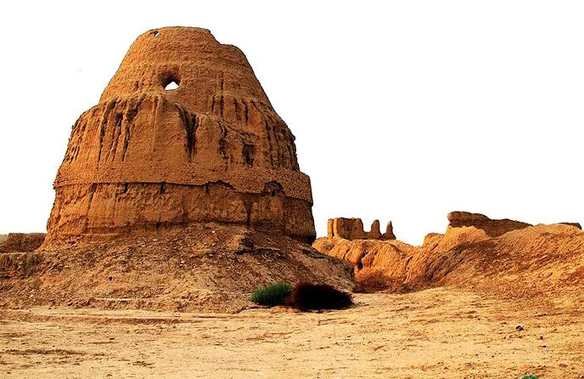
Mehrgarh is one of the most important prehistoric archaeological sites in South Asia, located in the Kachi Plain near the Bolan Pass in Balochistan. Archaeological discoveries have revealed remains of an early settled community, including mud-brick structures, pottery, tools, ornaments and burial sites. The settlement provides important evidence about the development of early agriculture, animal domestication and organized village life. Mehrgarh is especially significant for understanding the early history of human settlement in the region before the rise of the Indus Civilization.

History & Importance

Mehrgarh's earliest occupation dates to approximately the seventh millennium BCE, with archaeological evidence showing that the settlement developed through several prehistoric phases. Excavations revealed evidence of early farming, domesticated animals, mud-brick construction, burial practices and craft production. The French archaeological mission led by Jean-François Jarrige conducted major excavations from 1974 to 1986 and resumed work in 1996. The discoveries helped researchers understand how communities gradually developed settled agricultural life in the region. Mehrgarh is considered an important site for studying the prehistoric roots of South Asian civilization and is included on UNESCO's Tentative List.

What to See & Do

Visitors interested in archaeology can learn about the remains of prehistoric settlement, early construction techniques and discoveries that transformed understanding of the region's ancient past. The site is valuable for understanding early farming communities and the development of human settlements. Many archaeological deposits remain underground, so visible remains represent only part of the ancient settlement. Visitors should follow official access instructions, avoid disturbing archaeological mounds and never remove objects from the site. Museum collections can provide further insight into the discoveries made at Mehrgarh.

Department of Archaeology UNESCO – Mehrgarh
Hinglaj Mata Temple

10. Hinglaj Mata Temple

About

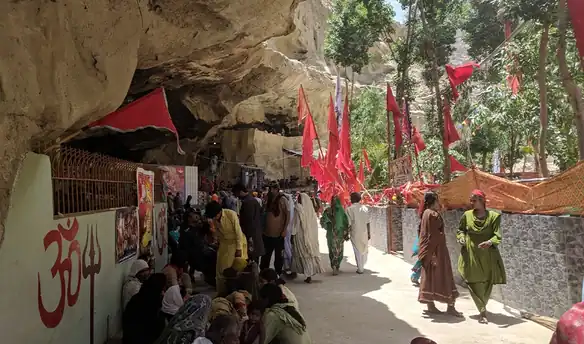
Hinglaj Mata Temple, also known as Hinglaj Devi or Nani Mandir, is one of the most important Hindu pilgrimage sites in Pakistan. It is located inside a mountain cave within Hingol National Park along the Makran coast. The shrine is surrounded by rocky hills and a dramatic desert landscape. Hindu pilgrims from Pakistan and other countries visit the temple to worship Hinglaj Mata and participate in religious traditions connected with the sacred site. Its location makes it a place of both religious and natural significance.

History & Importance

Hinglaj is an ancient centre of Hindu worship and is recognized in Hindu tradition as a Shakti Peetha. According to religious belief, the site is associated with the goddess Sati and is among the sacred places connected with the worship of the divine feminine. The shrine is also known locally as Nani Mandir. Its religious importance has continued across generations, and the annual Hinglaj Yatra attracts pilgrims who travel to the cave shrine for worship and traditional ceremonies. UNESCO's Tentative List entry for the Hingol Cultural Landscape highlights the temple's importance as part of the region's living religious and cultural heritage.

What to See & Do

Visitors can explore the sacred cave shrine, observe religious traditions and appreciate its natural setting within Hingol National Park. For Hindu pilgrims, the journey is an important spiritual experience. Other visitors can learn about the religious and cultural heritage of the area while respecting local customs. The annual pilgrimage is a major event, although access and arrangements may vary. Visitors should dress appropriately, follow shrine instructions and avoid disturbing worshippers. The temple can be included in a wider trip through the Makran coast and Hingol National Park.

UNESCO – Hingol Cultural Landscape
Mir Chakar Khan Fort Sibi

11. Mir Chakar Khan Fort, Sibi

About

Mir Chakar Khan Fort is a historic landmark in Sibi, Balochistan. Commonly known as Chakar Fort, it is associated with Mir Chakar Khan Rind, one of the most celebrated figures in Baloch history. The remaining structure reflects traditional defensive architecture, including mud walls, bastions and other features associated with fortified settlements. Its location in Sibi connects the monument with a region that played an important role in the political and cultural history of eastern Balochistan.

History & Importance

Mir Chakar Khan Rind is remembered in Baloch historical tradition as a prominent tribal leader associated with the Rind tribe during the fifteenth and sixteenth centuries. His legacy is closely connected with the political history and oral traditions of the Baloch people. The Department of Archaeology and Museums records Chakar Fort as a historic monument in Sibi. The surviving structure includes mud-brick and mud-slab construction, walls, bastions and watchtowers. The fort has experienced deterioration and damage over time, and its construction history is complex. It is therefore best understood as part of the region's longer history of settlement and defence rather than assigned an unsupported single construction date.

What to See & Do

Visitors interested in Baloch history can examine the remaining fort walls, defensive features and traditional construction methods. The site provides an opportunity to learn about Sibi's historical importance and the legacy of Mir Chakar Khan Rind. It can be included in a wider cultural journey through the district. Because parts of the structure are deteriorated, visitors should avoid climbing unstable walls or removing historic material. Confirm local access arrangements before travelling.

Department of Archaeology – Chakar Fort
Gondrani Caves

12. Gondrani Caves (Shehr-e-Roghan)

About

The Gondrani Caves, also known as Shehr-e-Roghan, are a remarkable group of rock-cut chambers near Bela in Lasbela district, Balochistan. The caves are set into a rocky hillside and are known for their unusual openings, small rooms and interconnected features. Their appearance has led to the popular name "Cave City". The isolated setting and distinctive rock structures make Gondrani one of the most intriguing heritage attractions in Balochistan. It is especially interesting for visitors who enjoy archaeology, unusual architecture and traditional stories.

History & Importance

The exact date, original builders and precise purpose of the Gondrani cave complex remain uncertain. Different local traditions and historical interpretations associate the caves with ancient communities, religious use and earlier settlement activity, but these explanations should not be treated as established facts without archaeological evidence. The site is important because its rock-cut chambers show how people in the region made use of the natural landscape for shelter or other activities. The name Shehr-e-Roghan is traditionally associated with the site, and the caves remain part of the local heritage and folklore of Lasbela.

What to See & Do

Visitors can observe the cave openings, rock formations and arrangement of chambers across the hillside. The site offers opportunities for photography, heritage exploration and learning about local traditions. The surrounding landscape is rugged, so suitable footwear and careful movement are important. Visitors should avoid entering unstable chambers, damaging rock surfaces or removing objects from the site. A visit can be combined with other attractions in the Lasbela region, subject to road conditions and local access arrangements.

Pakistan Tourism Portal